
Off-Plan Sales: How 3D Visualization Cuts Sales Cycles 50% & Boosts ROI 💰
The Billion-Dollar Problem: Selling Invisible Buildings
Okay, so imagine trying to sell someone a $500,000 condo that literally doesn't exist yet. Like, there's just dirt and a dream. Would YOU hand over half a million dollars for a stack of blueprints and a sketch that looks like it was drawn in Microsoft Paint? Probably not, right?
This is the daily struggle for real estate developers. They need people to commit HUGE amounts of money to buildings that are just concepts. And here's the kicker—the faster they can get people to say "yes" and hand over deposits, the better their entire business works. It's all about that cash flow!
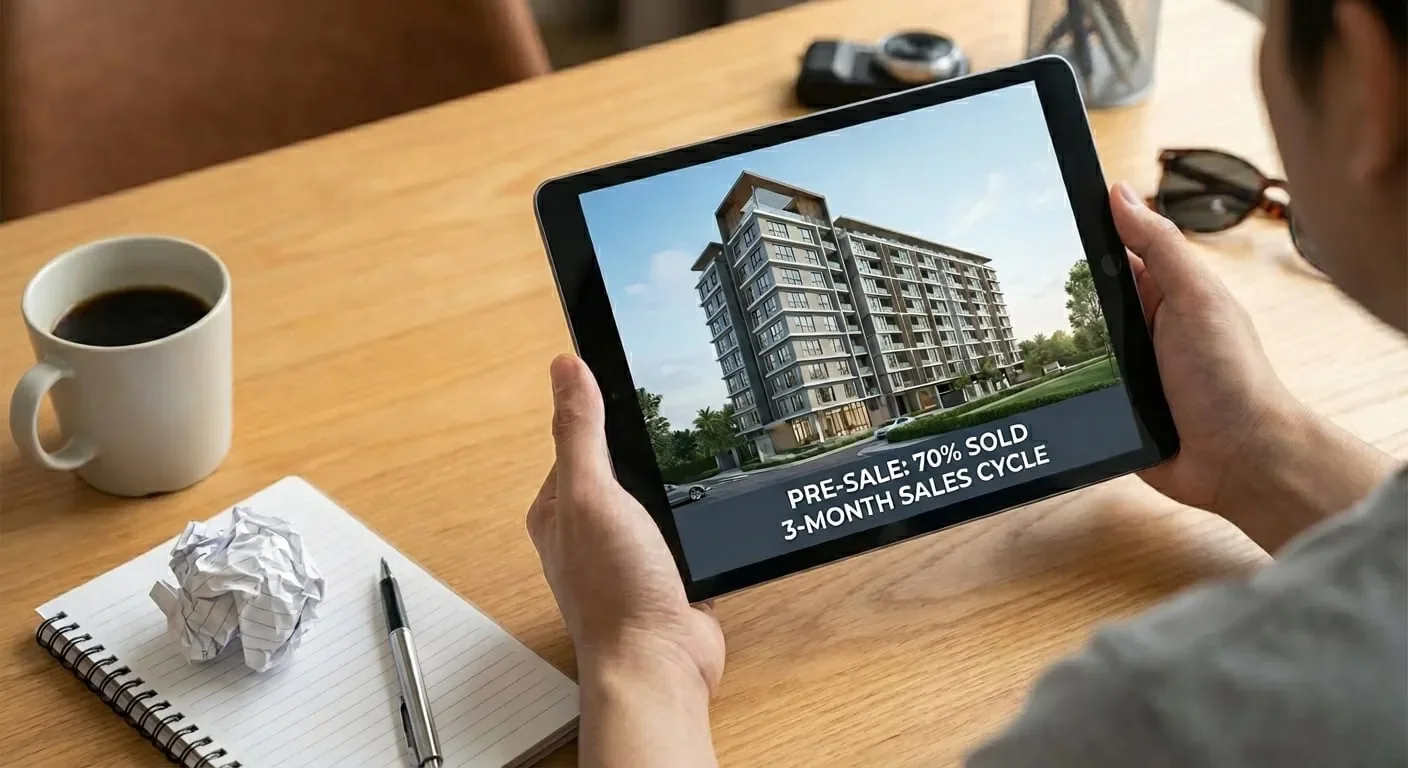
But here's where it gets interesting. JB Visuals worked with a bunch of developers and found something wild: when they used photorealistic 3D renderings (basically making the building look REAL before it's built), they got 70% of their units sold before they even broke ground! And get this—their sales cycles went from 9 months down to just 3 months. That's THREE TIMES faster!
Now, full transparency—these numbers come from agency case studies, not like university research or anything. But when you see the same pattern over and over across different projects and different companies, it's hard to ignore. Something's definitely working here.
Show Me The Money: Why This Actually Makes Developers Rich
Let's talk real numbers for a sec. TrimRender llc looked at their client projects and noticed that developers using professional 3D renderings were selling about 50% faster than the old-school way. Half the time!
But it gets BETTER. TrimRender llc also found that quality renderings helped developers sell units for 10-15% MORE money while cutting 4-6 months off their sales timeline.
Let's do some quick math (don't worry, I'll make it simple):
You're building a $50 million development
You sell units 15% higher because they look amazing in 3D = extra $7.5 million
You finish selling 6 months earlier = save TONS on carrying costs, interest, marketing
Your 3D visualization investment? Usually less than 1% of the project cost
That's an absolutely INSANE return on investment! Understanding visualization service pricing relative to total project value helps you see why smart developers are all over this technology.
Mayabious tracks this stuff globally and keeps seeing the same patterns—projects using quality visualization are selling way faster, with less risk, and developers are making more money. It's honestly a no-brainer at this point.
Turning Window Shoppers Into Buyers: The Conversion Magic
Here's something cool: InboundREM looked at 50+ developments and found that when they used 3D visuals:
35% MORE people reached out asking about units
Those people were 28% MORE likely to actually buy
Now yeah, this is self-reported data from their own clients, not a scientific study. But think about it logically—if you can SEE yourself living in a space, walking through the rooms, checking out the view from your balcony... you're way more likely to commit, right?
RenderFabrik focuses on these crazy 360-degree virtual tours where you can basically "walk through" apartments that don't exist yet. Their clients report that these interactive experiences are converting buyers like crazy and selling units 60% faster. It's like test-driving a car before you buy it, except the car is a $600,000 apartment that's currently just a hole in the ground!
Over in Australia, Stedaxis worked with developers using VR tours (yeah, the headset thing!) and they're seeing really strong pre-sales numbers. When buyers can PUT ON A HEADSET and literally stand in their future living room, the "is this real?" doubt just melts away.
Getting The Bank's Money Earlier: Why Timing Is Everything

Here's something most people don't think about: developers don't usually have $50 million sitting around to build stuff. They need loans. And banks are picky—they want to see that people ACTUALLY want to buy these units before they hand over construction money.
PropertyRender talks about how 3D animations help developers show banks exactly what they're building and prove that buyers are interested. When you can walk into a bank and say "Hey, we already have 70% of units sold and construction hasn't even started," the bank is like "HERE'S YOUR MONEY, WHEN DO WE START?"
MaverickFrame works specifically on making fancy animations for investor pitches. Their clients say these visuals help them get funding way faster because investors can actually SEE the vision instead of just imagining it from boring spreadsheets.
The better your pre-sales numbers, the better your loan terms. It's that simple. And 3D visualization is the secret weapon for getting those pre-sales numbers UP.
What Actually Works: The Tech That Matters
Not all 3D stuff is created equal. Stedaxis breaks down what actually makes a difference:
The Heavy Hitters:
VR Tours: Put on a headset, walk through your future home. Mind = blown
360-Degree Views: Spin around, look everywhere, see everything
Photorealistic Renderings: Images so real you'd swear the building already exists
Interactive Customization: "What if the walls were blue instead of white?" clicks button "Oh wow, I love it!"
Immersive Studio has UK projects where international buyers—people who can't even visit the country—are buying apartments after virtual tours. They're achieving 90% of their sales goals before construction starts, which is absolutely wild!
The psychology here is SUPER interesting. Buyers need to feel like they're actually THERE. They need to understand if their couch will fit, if the morning light will hit their coffee table just right, if they can see the city skyline from their bedroom. Technologies that create that "I'm already living here" feeling are worth their weight in gold.
When evaluating providers, developers should compare service offerings and pricing to ensure they're investing in quality that matches their project's market positioning.
Marketing Smarter, Not Harder
Here's a fun fact: RealRender3D noticed that when projects sell faster, developers actually spend LESS on marketing overall. Why? Because instead of running ads for 9 months, you're only marketing for 3 months. Less time = less money spent. Simple math!
Plus, your sales team becomes way more efficient. When buyers show up already half-convinced because they've explored the property virtually, sales conversations are shorter and easier. Less "um, I'm not sure" and more "where do I sign?"
Multiple agencies report that quality visualization cuts down on all those annoying questions about finishes and layouts because buyers have already SEEN everything. Your sales people can handle way more buyers in less time. Efficiency for the win!
Developers planning their visualization scope should consider available service packages that align with their specific pre-sales objectives and budget parameters.
Building Momentum: The Snowball Effect
Something really cool happens when your first phase sells well: the second phase becomes EASIER to sell. PropertyRender talks about how showing buyers the phasing plan through 3D animations builds confidence. Buyers can see "Okay, I'm in Building A, and Building B will go there, and that's where the pool will be..."
And here's the sneaky smart part: those 3D renderings you paid for in phase one? You can UPDATE them for phase two! You can use them for rental marketing! You can show them to investors for your NEXT project! The assets keep paying dividends long after you created them.
Playing It Safe: Reducing The Risk
Every month your project sits unsold, you're losing money. Carrying costs, marketing expenses, opportunity costs—it all adds up. Mayabious points out that strong pre-sales dramatically reduce your risk if the market tanks during construction.
If you're 70% sold before you start building and the market crashes halfway through construction, you're probably going to be okay. If you're 20% sold when that happens? Yikes.
Plus, getting strong buyer feedback on your 3D renderings BEFORE you finalize your plans means you can make changes while they're still cheap. Way better than finishing construction and hearing "Actually, we hate these countertops." Too late, buddy!
How To Actually Do This Right
Timing Matters: Start your visualization work early—like, while you're still doing design work. The goal is having your marketing materials ready to GO when you're ready to start selling.
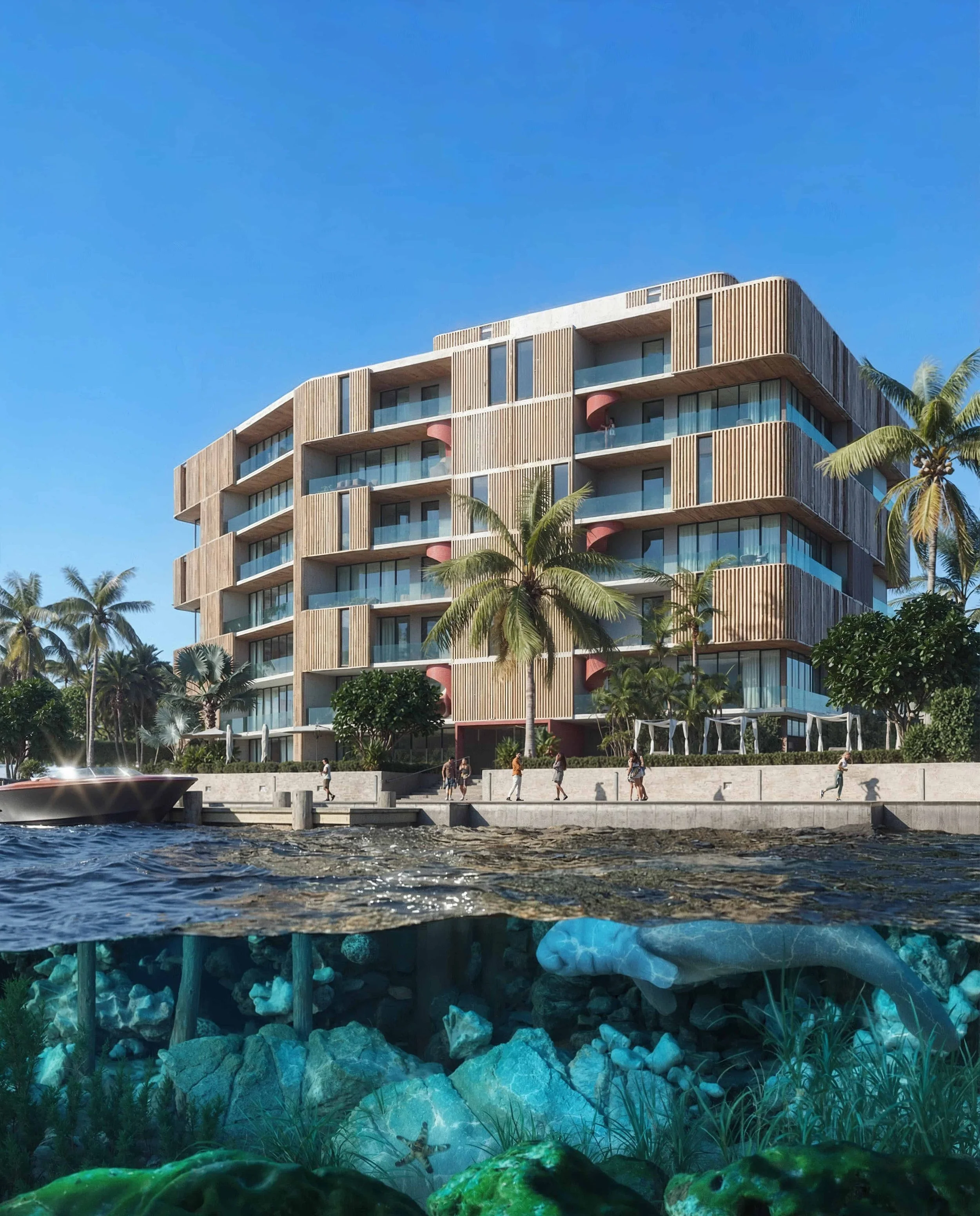
Quality Is EVERYTHING: JB Visuals hammers this point home: photorealism matters. Like, a LOT. Buyers subconsciously judge your building quality based on your rendering quality. Cheap-looking renderings = "This developer is probably cutting corners." Professional renderings = "This is a quality project."
It's psychology, but it's real!
Focus On What Matters: You don't need to render EVERYTHING. Focus on:
Key unit types (the ones you're selling most of)
Common areas (where people hang out)
The WOW features (rooftop deck, lobby, that amazing view)
RenderFabrik found that showing furnished spaces with proper lighting and seasonal context (like "here's what your balcony looks like on a sunny summer evening") drives way better results than empty white rooms.
Staying Competitive: Everyone's Doing It Now
Here's the thing: 3D visualization isn't a "nice to have" anymore—it's basically expected. InboundREM points out that buyer expectations have evolved. If YOUR project has basic sketches while the project down the street has immersive VR tours, guess where buyers are going?
But here's the flip side: because everyone's using basic 3D now, you need to go EXTRA to stand out. VR capabilities, interactive customization tools, cinematic fly-through videos—these are becoming the new differentiators in competitive markets.
The Future Is Already Here
The tech keeps getting better and CHEAPER:
Real-time rendering: Change materials and colors INSTANTLY during meetings with buyers
AI-assisted rendering: Cutting production time and costs way down
Better VR headsets: More affordable, more realistic, more comfortable
Virtual reality is especially exciting for international buyers and luxury projects. As the tech gets better and cheaper, what's currently "premium" will become standard across all market segments.
Let's Talk Real Numbers: Is It Worth It?
Okay, so here's the honest truth: most of these numbers come from agencies talking about their own client work, not from independent university research. So take them with a grain of salt. BUT—and this is important—when you see the SAME patterns across multiple sources, something's definitely happening:
What the industry is seeing:
Sales cycles: 30-50% faster (instead of 9 months, maybe 4-6 months)
Conversion rates: 20-35% better (more people who inquire actually buy)
Unit prices: 10-15% higher premiums (people pay MORE for places they can visualize)
Financing: Easier and faster to get (banks love strong pre-sales)
The logic totally makes sense, right? When people can see themselves living somewhere, they're more confident buying. And confidence = faster decisions = you get paid sooner.
The investment is usually less than 1% of your total project cost. So even if you only get HALF the benefits that agencies are reporting, you're still winning BIG. For developers ready to explore how visualization can impact their specific projects, reviewing detailed pricing and service options provides a starting point for ROI calculations based on their unique development parameters.
📊 3D Visualization Impact on Off-Plan Sales: By The Numbers
Data compiled from industry reports by JB Visuals, RealRender3D, InboundREM, and analysis of 50+ development projects. Results may vary based on market conditions, project specifics, and visualization quality.
The Bottom Line: Why This Matters
3D visualization isn't just "pretty pictures for marketing"—it's a tool that fundamentally changes how real estate development works. When you can:
Sell units before you build them ✅
Sell them FASTER ✅
Sell them for MORE money ✅
Get better financing terms ✅
Reduce your risk ✅
Spend less on marketing ✅
...all for less than 1% of your project cost, it's kind of a no-brainer.
The developers who are crushing it right now—selling 70% of units before breaking ground, closing deals in months instead of quarters, getting amazing loan terms—they all say the same thing: quality 3D visualization was a game-changer.
Look, the evidence isn't perfect. These aren't scientific studies with control groups and peer review. But the pattern is CLEAR and it's consistent: professional 3D visualization helps you sell faster, sell more, and make more money.
In an industry where timing is everything and cash flow is king, that's worth paying attention to.
Ready to see what this could look like for your next project? Check out available services and pricing options and see how visualization might work for your specific timeline and budget. Your future buyers (and your accountant) will thank you!
Frequently Asked Questions About 3D Visualization for Off-Plan Sales
How much does 3D visualization cost for a real estate development?
3D visualization typically costs less than 1% of total project costs. For a $50 million development, you might invest $250,000-$500,000 for comprehensive visualization including photorealistic renderings, 360-degree tours, and VR experiences.
Here's a typical breakdown of 3d rendering studios vs. Trim render prices.:
Exterior renderings: $1,500-$5,000 each | Trim render: $700
Interior renderings: $800-$3,000 per image | Trim render: $500
360-degree virtual tours: $5,000-$15,000 for a typical unit | Trim render: $900
VR experiences: $15,000-$50,000+ depending on scope | Trim render: $365 per space.
When you consider that quality visualization can help you achieve 10-15% unit price premiums and sell 50% faster, the ROI is substantial. The investment pays for itself many times over through faster sales, premium pricing, and better financing terms.
[View detailed pricing options](https://trimrender.com/pricing) to see what fits your project scope and budget.
What's the average ROI on 3D visualization investment?
Based on industry reports from multiple agencies, developers typically see compelling returns across several dimensions:
**Price Premiums**: Unit price premiums of 10-15% mean a $500,000 unit might sell for $550,000-$575,000 when marketed with quality visualization.
**Time Savings**: Reducing your sales cycle from 9 months to 3-4 months saves significant carrying costs—potentially $100,000+ per month on a $50M project.
**Better Financing**: Achieving 70% pre-sales before construction improves your construction financing terms, potentially saving hundreds of thousands in interest.
Real example: A $400,000 visualization investment on a $50M project can deliver returns of $5-10 million through faster sales, premium pricing, and better financing. That's a 10-20x ROI.
Do I need VR tours or are photorealistic renderings enough?
It depends on your target market and price point. For projects under $500,000 per unit targeting local buyers, high-quality photorealistic renderings and 360-degree virtual tours are usually sufficient. These enable buyers to visualize spaces and make confident decisions.
However, VR tours become increasingly valuable for:
- **Luxury properties** ($1M+): High-end buyers expect immersive experiences
- **International buyers**: VR eliminates the need for site visits, crucial when buyers are overseas
- **Complex layouts**: Multi-level penthouses or unique floor plans benefit from the spatial understanding VR provides
- **Competitive markets**: VR differentiates your project when multiple developments compete for attention
According to [Stedaxis](https://www.stedaxis.com/blog/real-estate-pre-sales-10-must-have-3d-visualization-features), projects using VR tours achieve stronger off-plan absorption rates. Start with excellent renderings and 360 tours, then add VR if your market justifies the additional investment.
How long does it take to create 3D visualizations for a development project?
Timeline varies based on scope and complexity:
- Individual Renderings: 3-4 days per image after approval of initial concepts
- 360-Degree Virtual Tours: 2-3 weeks for a typical unit with 8-12 scenes
- VR Experiences: 6-10 weeks for fully interactive virtual reality tours
The key is starting early—ideally during the design development phase. This gives you marketing materials ready when you're prepared to launch pre-sales. Rush jobs are possible (sometimes in 1-2 weeks) but may cost 30-50% premium and could compromise quality.
Since quality directly impacts buyer confidence and conversion rates, it's worth planning adequate timelines. The most successful developers integrate visualization into their project timeline from the beginning rather than treating it as an afterthought.
Can 3D visualization help me get better construction financing?
Absolutely. Construction lenders evaluate pre-sales percentages heavily when determining loan-to-value ratios, interest rates, and approval decisions. Here's how visualization impacts financing:
**Stronger Pre-Sales Numbers**: Quality visualization helps you achieve 60-70% pre-sales before construction, which lenders love. Higher pre-sales typically unlock:
- Better loan-to-value ratios (potentially 75-80% vs 60-65%)
- Lower interest rates (sometimes 0.5-1% reduction)
- Faster approval processes
- More favorable terms overall
**Credibility in Lender Presentations**: When you present to lenders with professional visualization showing exactly what you're building, it demonstrates professionalism and reduces their perceived risk. [MaverickFrame](https://maverickframe.com/3d-visualization-for-real-estate-developers/) reports clients achieving 30% faster funding rounds when using custom animations in investor pitches.
**Risk Mitigation**: Strong pre-sales enabled by visualization reduce the lender's risk exposure. If you have 70% of units sold before breaking ground, the bank knows there's already market validation and exit strategy.
What's the difference between 3D renderings and virtual tours?
Here's the breakdown:
**3D Renderings (Static Images)**:
- Still, photorealistic images showing specific views
- Like professional photography of a building that doesn't exist yet
- Best for: Marketing materials, brochures, websites, print ads
- Cost: $1,500-$5,000 per exterior, $800-$3,000 per interior
- Timeline: 3-4 days per image
**360-Degree Virtual Tours**:
- Interactive panoramic experiences where users can look around in all directions
- Users navigate between "nodes" (different room viewpoints)
- Best for: Online marketing, remote buyer experiences
- Cost: $5,000-$15,000 for typical unit
- Timeline: 2-3 weeks
**Full VR Experiences**:
- Immersive headset-based tours where users can walk through spaces
- Most realistic experience short of physical presence
- Best for: Luxury properties, international buyers, sales centers
- Cost: $15,000-$50,000+ depending on scope
- Timeline: 6-10 weeks
Most developers start with a package including key renderings plus 360 tours, then add VR if their market demands it. [RenderFabrik](https://www.renderfabrik.com/boost-your-sales-with-3d-visualization-for-lead-generation/) found that 360 virtual tours drive 25% higher conversion rates compared to static renderings alone.
How early in the development process should I invest in 3D visualization?
The short answer: as early as possible, ideally during the design development phase.
**Optimal Timeline**:
1. **Schematic Design Phase**: Initial concept renderings help you test market interest and refine design based on buyer feedback
2. **Design Development Phase**: Create your main marketing package—this is ideal timing because designs are firm enough to visualize accurately yet still flexible enough to adjust based on market response
3. **Pre-Sales Launch**: Have all visualization assets ready when you announce the project
**Why Early Matters**: Starting visualization work 6-12 months before construction launch enables you to:
- Build marketing momentum gradually
- Collect buyer deposits earlier (improving cash flow)
- Achieve strong pre-sales before breaking ground
- Secure better construction financing terms
- Make design adjustments while they're still inexpensive
Waiting until right before construction starts compresses your pre-sales timeline and potentially delays groundbreaking. The most successful developers treat visualization as a project phase requirement, not a marketing afterthought.
What features should I prioritize in my 3D visualization package?
Based on analysis from [Stedaxis](https://www.stedaxis.com/blog/real-estate-pre-sales-10-must-have-3d-visualization-features), here are the must-have features for maximizing off-plan sales:
**Essential (Must Include)**:
1. Photorealistic quality with professional lighting and accurate materials
2. Key unit types fully visualized (your best-selling floor plans)
3. Common amenities (lobby, pool, fitness center, rooftop)
4. Contextual exteriors showing the building in its actual location
5. Furnished interiors so buyers can envision living there
**High-Value Additions**:
6. 360-degree tours of 2-3 key unit types
7. Multiple times of day showing how natural light changes
8. Seasonal variations if your climate varies significantly
9. Lifestyle scenes with people enjoying amenities
10. Animated flythrough (60-90 second cinematic tour)
**Premium Options (If Budget Allows)**:
- Full VR experiences for your sales center
- Interactive customization tools (change finishes in real-time)
- Aerial drone-style perspectives
- Phasing animations showing development timeline
Don't try to visualize everything—focus on what will drive purchase decisions for your specific buyer demographic. When evaluating providers, [compare service offerings and pricing](https://trimrender.com/pricing) to ensure you're investing in quality that matches your project's market positioning.
How do I measure the ROI of my 3D visualization investment?
Track these specific metrics to quantify visualization impact:
**Sales Velocity Metrics**:
- Days on market per unit
- Pre-sales percentage at construction start
- Time from launch to 50% sold
- Time from launch to 80% sold
**Conversion Metrics**:
- Inquiry-to-showing ratio (how many web visitors request information)
- Showing-to-offer ratio (percentage of sales presentations that result in offers)
- Offer-to-close ratio (percentage of offers that complete)
- Overall funnel conversion rate (inquiries to closed sales)
**Financial Metrics**:
- Average price per square foot (compare to similar projects)
- Premium percentage over initial pro forma pricing
- Deposit collection timeline
- Total marketing cost per unit sold
- Construction financing terms achieved (interest rate, LTV ratio)
**Example Calculation**:
- Project: 100 units, $50M total value
- Visualization investment: $400,000
- Results: 15% price premium (+$7.5M), 6 months faster ($600K saved), better financing ($400K saved), reduced marketing ($200K saved)
- Total benefit: ~$8.7M
- ROI: 2,075%
Even if you achieve just 25% of these reported benefits, the ROI remains compelling.
What if buyers want changes after seeing the 3D visualizations?
This is actually a FEATURE, not a bug! Getting buyer feedback early—before construction—is incredibly valuable.
**The Smart Approach**:
1. **Design Flexibility**: Keep some elements customizable (finishes, fixtures, colors)
2. **Early Market Testing**: Use initial renderings to gauge response to design elements
3. **Tiered Options**: Offer standard, premium, and luxury finish packages
4. **Change Cutoff Dates**: Establish clear timelines (changes accepted until X months before construction)
**Real-World Benefits**: When developers collect buyer feedback through visualization reviews, they often discover unexpected preferences (buyers want darker cabinets than designers assumed), feature priorities (buyers care more about balcony size than extra closet space), and pricing sensitivity (luxury upgrade packages sell better than anticipated).
Making adjustments based on visualization feedback—while designs are still flexible—prevents costly post-construction issues. It's much cheaper to change a rendering and update plans than to renovate completed units that don't match buyer preferences.
**Pro Tip**: Some developers offer "interactive customization experiences" where buyers can see different finish options in real-time during sales presentations. This personalization increases buyer emotional investment and willingness to commit. Developers planning their visualization scope should consider [available service packages](https://trimrender.com/pricing) that align with their specific pre-sales objectives and budget parameters.
Want To Learn More? Check These Out:
JB Visuals - How 3D Visualizations Help Real Estate Developers Sell Faster
RenderFabrik - Boost Your Sales With 3D Visualization For Lead Generation
InboundREM - Marketing Pre-Construction Projects with 3D Renderings
RealRender3D - Power of 3D Rendering in Pre-Construction Marketing
PropertyRender - Effective Marketing Strategies for Off-the-Plan Sales
RealRender3D - How 3D Rendering Services Help Property Developers Visualize ROI
Stedaxis - Real Estate Pre-Sales: 10 Must-Have 3D Visualization Features
Immersive Studio - 3D Architectural Visualisation for Property Developers